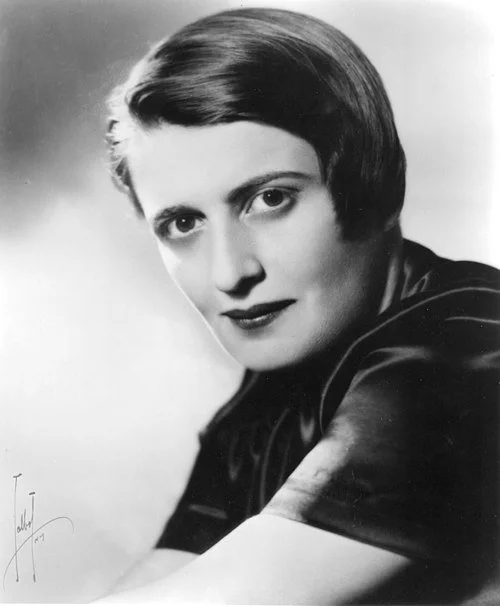
I finished reading The Fountainhead last night. The time was 12:30AM. I pushed through to the last page, to the last sentence, “There was only the ocean and the sky and the figure of Howard Roark.” (Rand 754). It has taken me fifty years to read a work by Ayn Rand. She was on my list early and I never got there, until last night. The character of Howard Roark, as well as all of the characters, strike me as magnetic and repellent. The title ‘Un-Joined’ is the subject of this essay and the thesis pursues the reluctance of joining associations, clubs, fraternities and such—American identity favors the independent character in spite of moral misgivings.
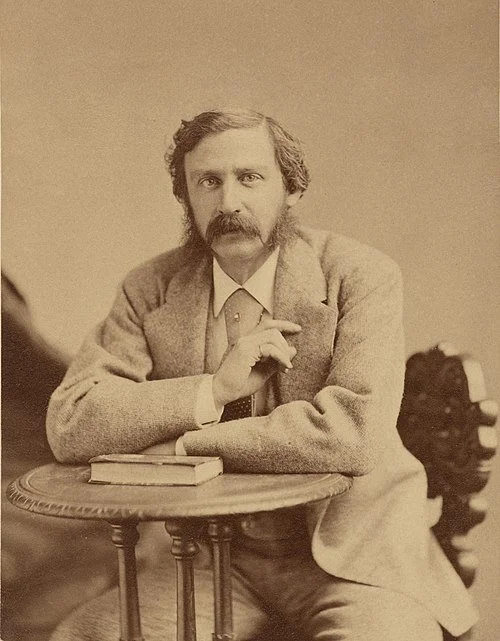
I could not sleep so I started to look through other authors on my shelf and found The Luck of Roaring Camp and other stories by Bret Harte. There is a funny moment for me when I have been involved in a long book, I am still in it with an ambition to move on at the same time. I need to consume again. The coupling of Howard Roark and Bret Harte is serendipitous and leads me here. The revelation is the consumption of characters. I began to search for information about Bret Harte.
In Ayn Rand’s novel Howard Roark is presented throughout as a force of individualism. He is not a joiner. Roark’s outlook may be understood in a quote on page 740 of the Bobbs-Merrill first edition. He addresses a courtroom where he defends himself, “Degrees of ability vary, but the basic principle remains the same: the degree of a man’s independence, initiative and personal love for his work determines his talent as a worker and his worth as a man. Independence is the only gauge of human virtue and value. What a man is and makes of himself; not what he has or hasn’t done for others. There is no substitute for personal dignity. There is no standard of personal dignity except independence.” (Rand 740). The novel offers the lives of four men as the basis of the reading, four parts—Peter Keating, Ellsworth M. Toohey, Gail Wynand, and Howard Roark. The novel intersects with each character's involvement with an elusive female, Dominique Francon. Earning her approval is tied with the quest for power and independence–the male attributes of self sufficiency and sexual vibrancy. Her character will submit to the right man, a shrew to be tamed. Roark symbolizes the ideal man for her, and thus gives structure to Ayn Rand's position—women want a strong independent man if they are to submit—an un-joiner. Rand gives voice to Roark as a primary creator, not a second-hand follower.
I started to search for information about Bret Harte. He was born in Albany, New York and made his way to California. His activities in a variety of occupational positions may be summarized here with his retreat from Arcata, California following the Wiyot Massacre. He wrote about it. “There his support of Indians and Mexicans proved unpopular; after a massacre of Indians in 1860, which he editorially deplored, he found it advisable to leave town.” (Blumberg, Encyclopedia Britannica). I am thinking about this in terms of independence, the journey of accepting ‘brotherhood’ and the rejection of it. In our American identity is the character who wrestles with his conscience and must accept or reject societal positions. In The Fountainhead newspaper mogul Gail Wynand is introduced. He rises from the streets of New York’s Hells Kitchen. He represents an independent character with moral transgressions. One finds oneself rooting for him during a strike even though the alignment is out of sync with social justice norms. He is a man fighting for his way. I am reminded of Frank Sinatra as a voice of independence, My Way. This intersection of thoughts leads to The Bohemian Club of San Francisco.
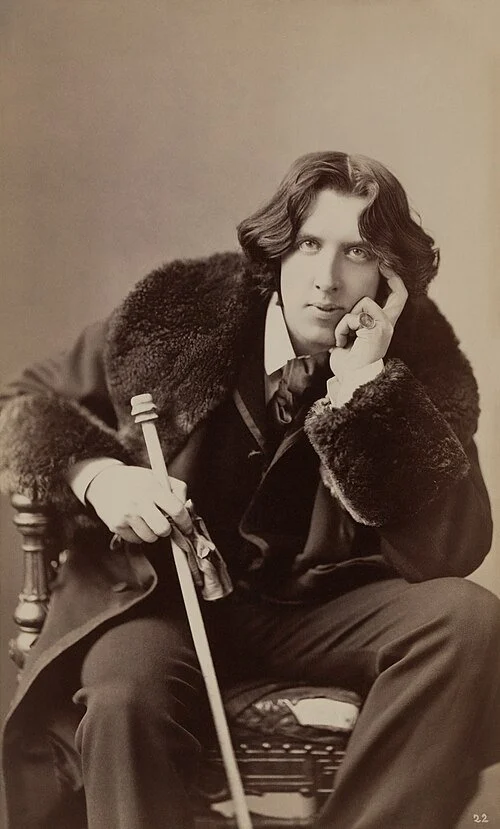
When investigating Bret Harte I learned he was named an honorary member in 1873. He was already away from California and living on the east coast. “The Bohemian Club was formed in April 1872 by journalists who wished to promote a fraternal connection among men who enjoyed the arts. Journalists were to be regular members; artists and musicians were to be honorary members.” (NoeHill). My understanding is that the club started as a place for writers to gather, they adopted figures who had achieved a reputation in California such as Bret Harte and Mark Twain. While the original goal was literary and bohemian, the club later admitted non-artists, “The group quickly relaxed its rules for membership to permit some people to join who had little artistic talent, but enjoyed the arts and had greater financial resources. Eventually, the original "bohemian" members were in the minority and the wealthy and powerful controlled the club.” (Editors, Wikipedia). The clientele of the club was observed on a visit by Oscar Wilde in 1882, "I never saw so many well-dressed, well-fed, business-looking Bohemians in my life." (Editors, Wikipedia). Oscar Wilde’s later downfall may give one pause when considering the layers of association, allegiance, and artistic freedom.
The Wiyot Massacre is well known as are the triumphs of capitalism in San Francisco and Northern California. We adore our independence. In general, from my observational viewpoint, Californians embrace wealth as a component of independence and conflict. It is from here that we write on the internet, create and watch videos on YouTube, and search with queries online. Howard Roark represents our conflict of self. In the novel he is written as an independent yet he acutely needs to join to the degree that he can be himself, as an architectural creator.
Our sense of truth to power can be tested. Speaking of joining, we live in our society as subscribers. Independence is a dilemma for everyone. As an example, we may observe content on YouTube where a lone individual, possibly a female, is creating a video about living away from society. Such videos emphasize independence and small, simple living in nature. The presentations are appealing. The videos may stress getting away yet independence is tied to a channel and a need to be not-independent—to be with others—and seeking subscribers. In turn, one may observe individualized videos decrying the crumbling state of things, San Francisco, California, or other American places, on YouTube. My search for information on the Wiyot Massacre was completed with Wikipedia. We are in need of independence, an ego, and such, while our morality and execution are tied to the society we are woven within.
Given all of these thoughts it remains true that the independent character is highly valued and honored when given to fight alone. People may be outraged yet will recognize the pursuit of an individual character. Hence, Bret Harte’s illumination of goings-on in California with moral questioning, Oscar Wilde as a thinker and provocateur, or the fictional characters of The Fountainhead, are examples of the independence needed to un-join society while also subscribing to the power available to do it. Un-Joining and Joining are a union.
By Drew Burgess
Drew Burgess is an art instructor at College of Alameda of the Peralta Community College District.
Cite this page: Burgess, Drew, “Un-Joined”, February 15, 2026,
https://www.drewburgess.art/essays/2026/2/15/un-joined
Works Cited:
Rand, Ayn, The Fountainhead, Bobbs-Merrill, 1943, print.
Blumberg, Naomi, Encyclopedia Britannica, “Bohemian Club”, accessed February 15, 2026,
https://www.britannica.com/topic/The-Bohemian-Club
Editors, NoeHill, “Bohemian Club”, accessed February 15, 2026, https://noehill.com/sf/landmarks/poi_bohemian_club.asp
Editors, Wikipedia, “Bohemian Club”, accessed February 15, 2026,
https://en.wikipedia.org/wiki/Bohemian_Club
Editors, Northwestern California Genocide Project, “Indian Island Massacre of 1860”, accessed February 15, 2026,
https://nwgenocide.omeka.net/exhibits/show/wiyot--tuluwat--massacre
Bret Harte photographed in 1872
Oscar Wilde in 1882 photographed by Napoleon Sarony
Ayn Rand photographed in 1943
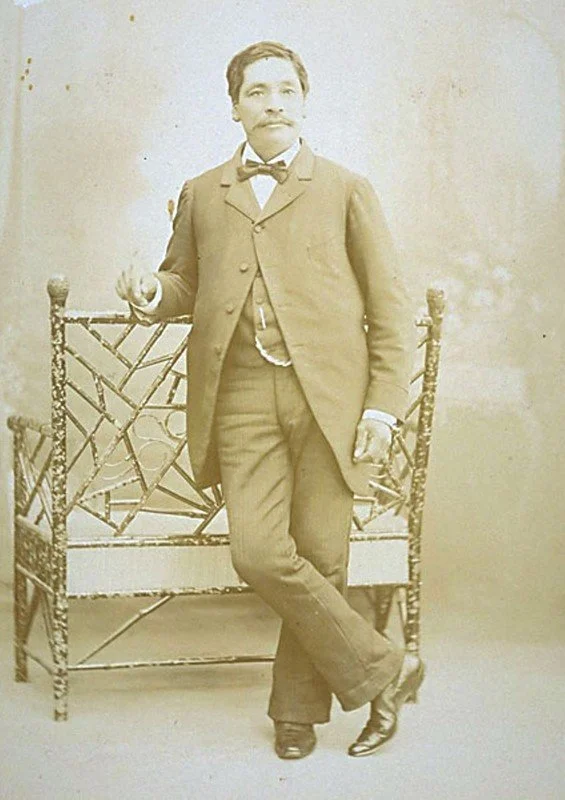
Jerry James, Indian Island Massacre survivor.